I Ranked 5 Random Tiny Gadgets — The One I Almost Forgot Won
I tested five unrelated tiny gadgets in one sitting — a lockable dictionary book safe, a USB arc lighter, a 60X pocket microscope with a currency-checking LED, a 7-in-1 survival whistle with a lens I never fully figured out, and a magnetic RGB fill light I almost skipped entirely. The one I nearly forgot about turned out to be my favorite of the five.
Published September 18, 2026
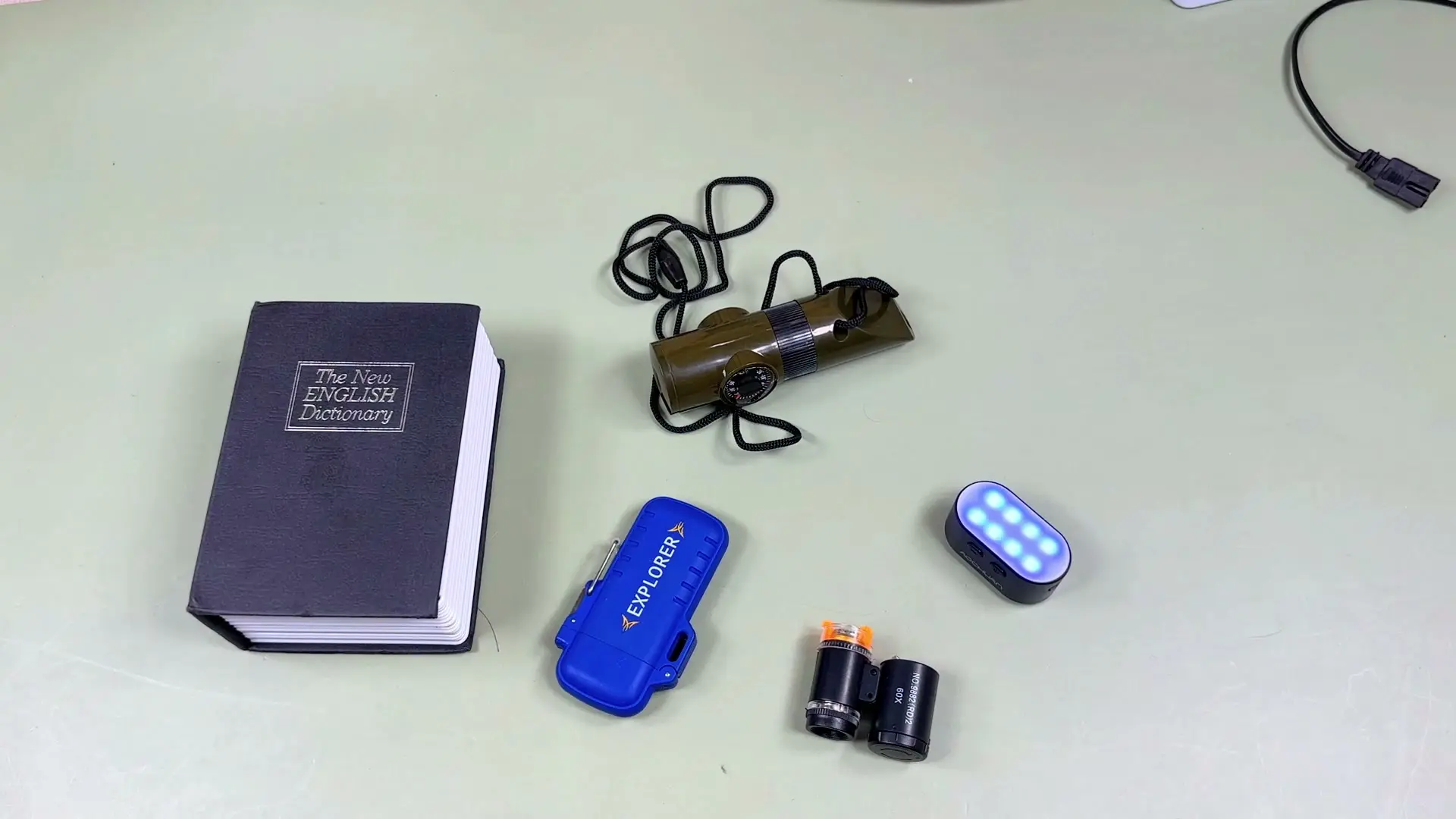
Tested context
Unboxed and tested five completely unrelated small gadgets back to back on camera: a lockable coin box disguised as a dictionary, a rugged USB-rechargeable arc lighter, a tiny 60X pocket microscope with a UV/LED switch, a 7-in-1 camping whistle with a compass, thermometer, mirror, and an unlabeled lens, and a magnetic RGB fill light meant for webcam calls and phone photography. Opened, handled, and tried out each one to see what actually worked as advertised.
Verdict
The AOCHUAN magnetic fill light was the clear standout — I nearly skipped talking about it at the end of the video and it turned into my favorite of the five, with real RGB color output, multiple brightness levels, and genuine use for webcam calls and phone photography. The dictionary book safe was the least useful of the group — a decent disguise, but ultimately just a locked box. The arc lighter, pocket microscope, and survival whistle all landed in the middle: each had a genuinely well-built, interesting detail, but none displaced the fill light as the gadget worth actually keeping around.
Pros
- The AOCHUAN fill light has real RGB color output (not just white) plus multiple brightness levels, and mounts magnetically for webcam calls or phone photography
- The dictionary book safe's disguise is convincing — sitting on a shelf, it reads as a real book, and its lock is metal, not flimsy plastic
- The EXPLORER arc lighter feels genuinely solid, with USB-C charging, a lanyard, and a buckle safety catch on the lid
- The 60X pocket microscope's UV/OFF/LED switch works as shown, and the LED setting doubles as a usable light source for checking currency
- The survival whistle packs a compass, thermometer, mirror, and whistle into one small camping-oriented unit
Cons
- The dictionary book safe is, at the end of the day, just a locked box — useful mainly as a novelty or a low-stakes hiding spot
- The survival whistle's extra lens has no stated purpose in the manual or packaging — I guessed it might be for fire-starting by focusing light, but I couldn't test that indoors after dark, so I'm not confirming it
- The pocket microscope is marketed and framed as more of a kid's toy than a precision instrument — don't expect lab-grade optics
- The fill light's actual color output is easy to underestimate on camera; it looks better in person than it does on video
Five completely unrelated tiny gadgets, tested back to back in one sitting: a dictionary that's secretly a lockbox, a rugged little arc lighter, a pocket microscope with a currency-checking trick, a camping whistle with a part I never fully figured out, and a magnetic fill light I almost didn't bother mentioning. No theme connects them other than that they're all small and I was curious. By the end, the one I nearly forgot about became the one I liked most.
Watch the full video review on YouTube.
The dictionary book safe — a locked box in disguise
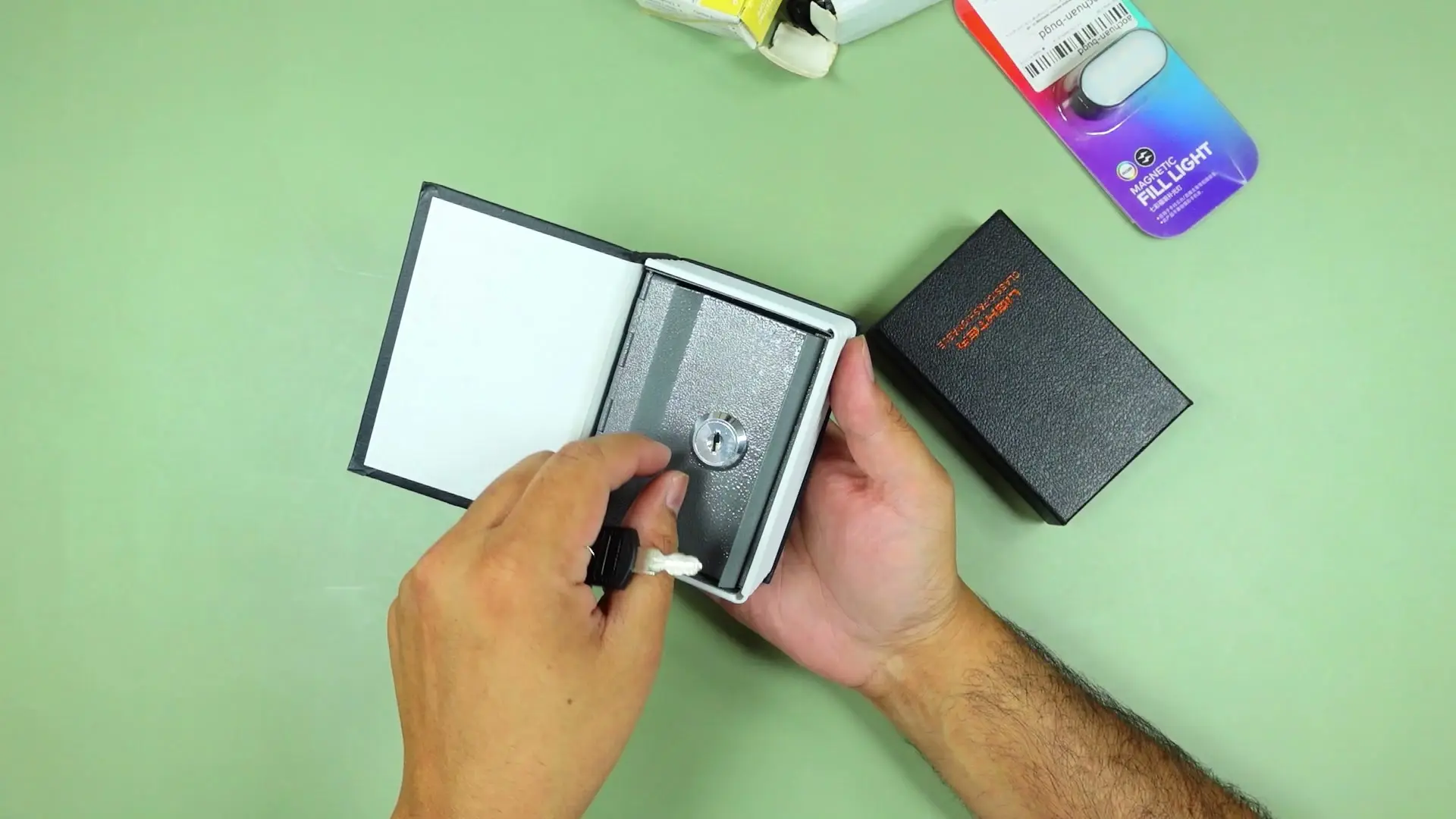
This looks like an ordinary dictionary sitting on a shelf — same size, same cover, same page-block edges. Open it up, though, and it's actually a coin/money box with a real lock. The lock housing is metal, not the flimsy stamped tin you sometimes get on novelty boxes like this — you're not breaking it open with your hands, even if a determined effort with tools eventually would. Sitting on a shelf among real books, it genuinely blends in. Past the disguise and the lock quality, though, there's not much more to it: it's a box that locks, nothing more.
The EXPLORER USB arc lighter
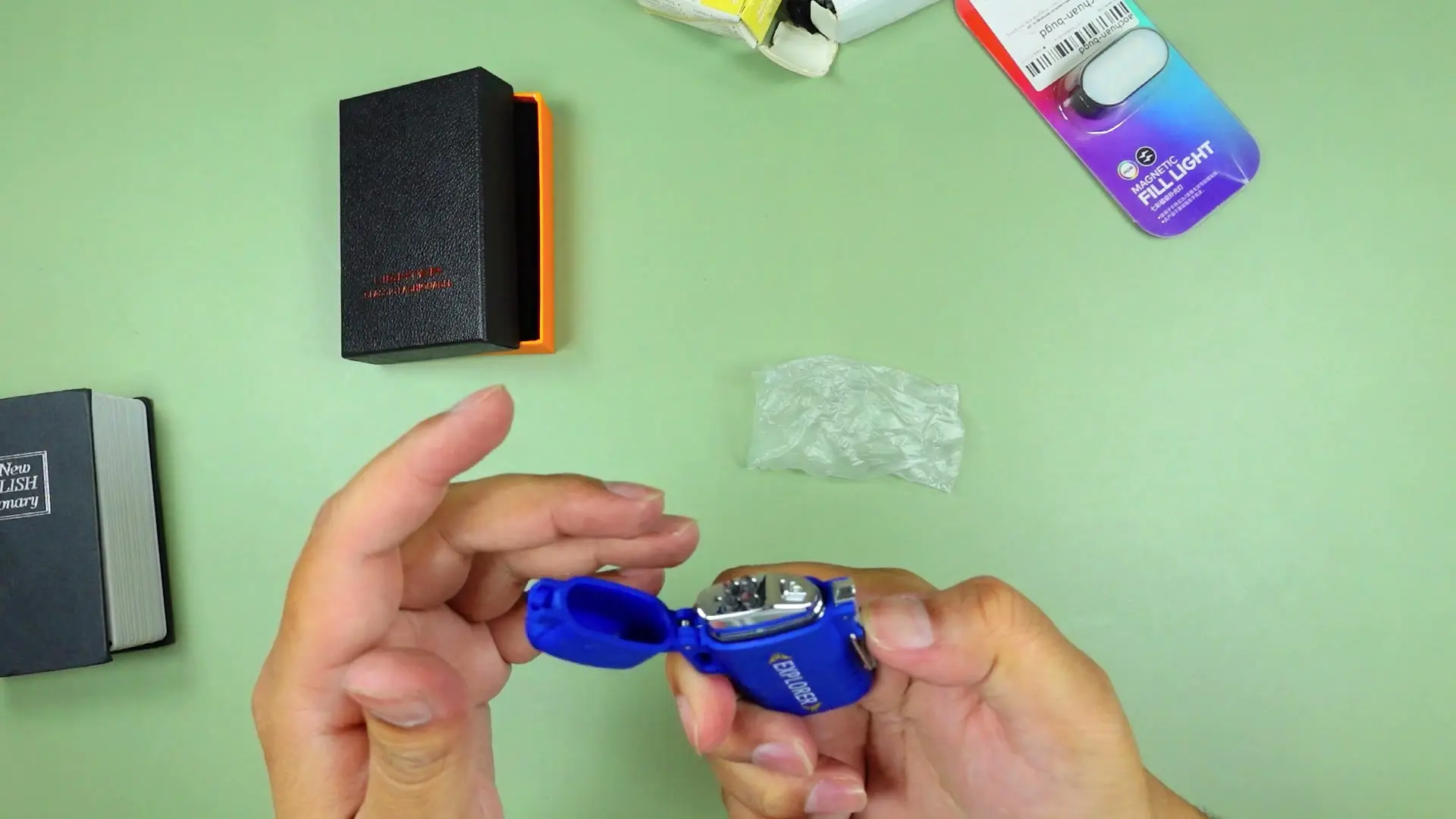
This one earned a genuine "I really like it" while unboxing. It's small but feels solid — no cheap plastic flex — and charges over USB-C instead of needing butane or replaceable flints. There's a lanyard loop for carrying it, and the whole thing comes packed in a cute foam-lined box. Flip the lid open and you get the arc-ignition head: two metal electrodes that arc across the gap to light things, angled diagonally rather than straight across, which looks better than the flat version. There's an LED indicator on the side, and — the detail that actually matters if you're buying this for a kid-adjacent household — a buckle-style safety catch on the lid that keeps it from being casually flipped open.
The 60X pocket microscope and its currency-checking LED
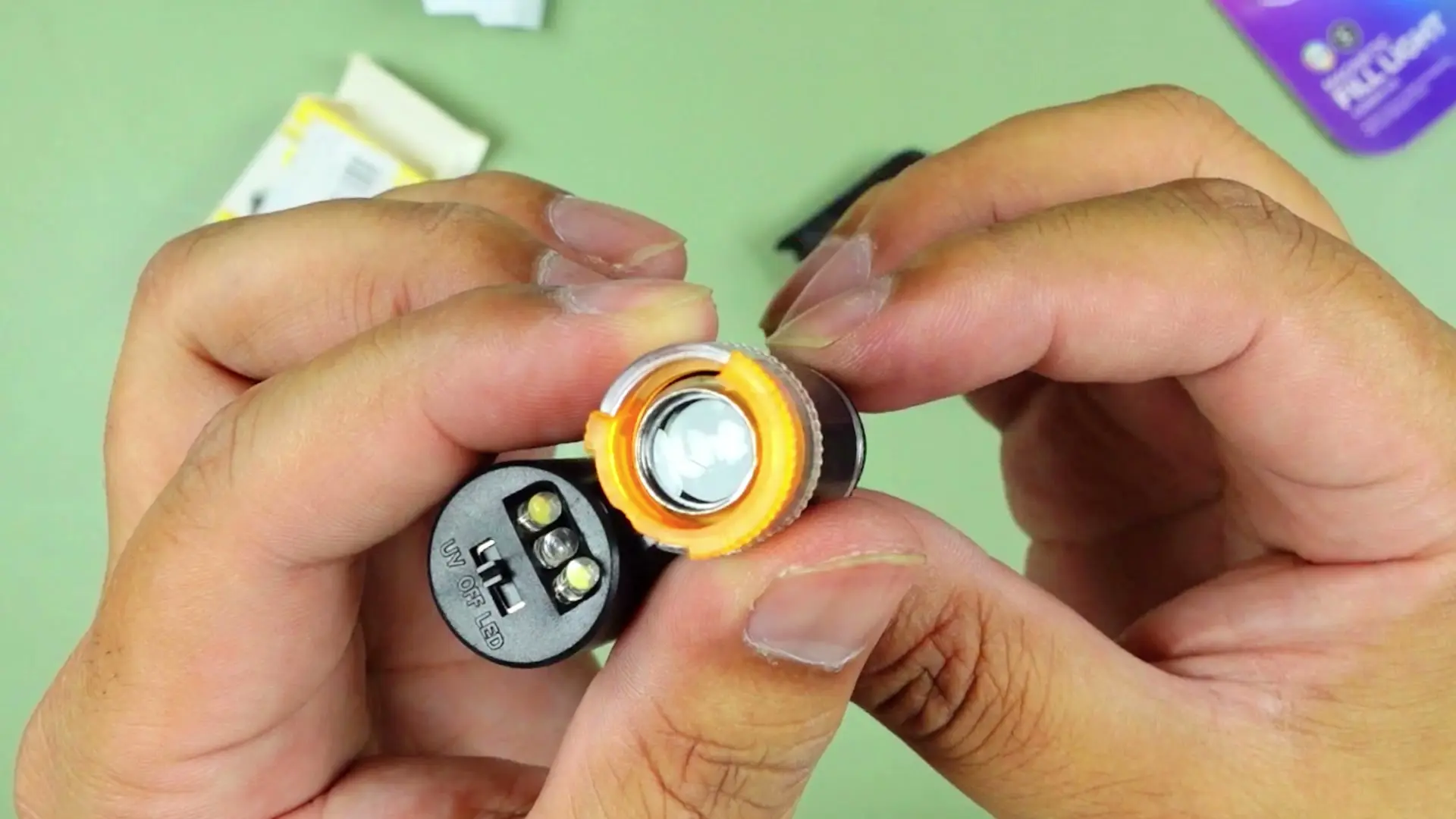
Small, cute packaging, and battery-powered. The dial on the side switches between visible light, off, and UV — flip it to the LED setting and you get a lit lens that can double as a light source for checking currency, which is the feature the product leans on. Looking through it at random objects, the focus takes a bit of fiddling to dial in, and once it's right there's genuinely more detail visible than you'd expect from something this size. It's worth being upfront, though: in use it reads more like a fun kids' toy than a precision instrument — don't go in expecting lab-grade optics, and the 60X zoom number on the packaging is more of a marketing figure than something worth taking literally.
The 7-in-1 survival whistle — and the lens I never fully solved
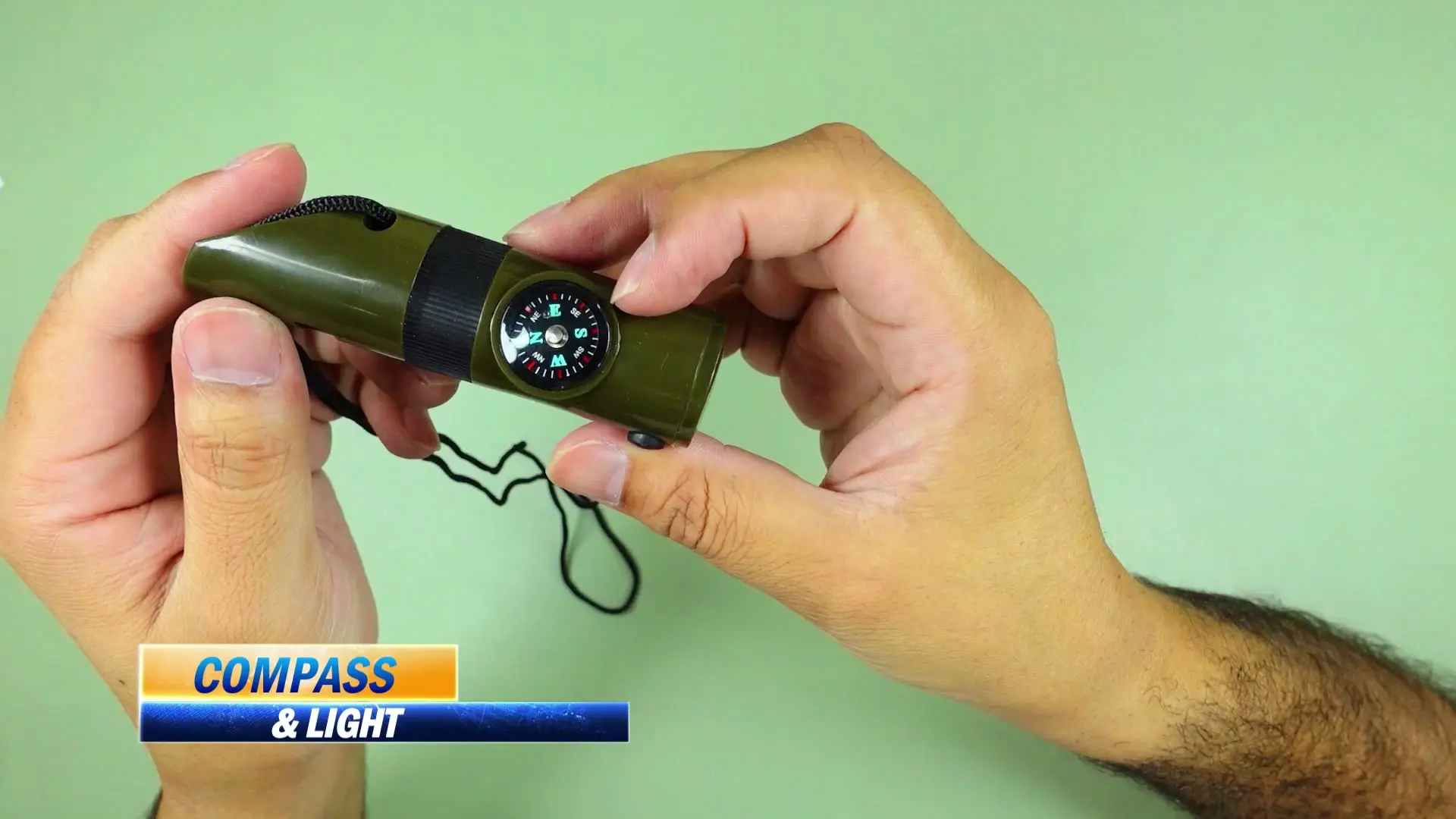
This is a genuinely packed little tool: a compass, a thermometer, a signal mirror, and a whistle, all built into one unit with a lanyard so it can hang around your neck. The compass works as expected, if a little stiff. The thermometer reads a temperature, for what it's worth on a small analog dial. The mirror is straightforwardly a mirror, useful for catching a reflection to signal with.
Then there's a lens built into the same housing that I genuinely couldn't pin down. It's not labeled anywhere on the packaging, and there's no manual explaining it. My best guess, after handling it, is that it's meant to focus light for fire-starting — the classic magnifying-glass trick — but I didn't have direct sunlight available to actually test that theory, and holding it up to my one available light source in the room did nothing. So I'm not going to claim it works for that; it's a real gap in this review. If you're buying this whistle specifically for that function, treat it as unconfirmed until someone tests it outdoors in real sun.
The AOCHUAN magnetic RGB fill light — the one I almost forgot
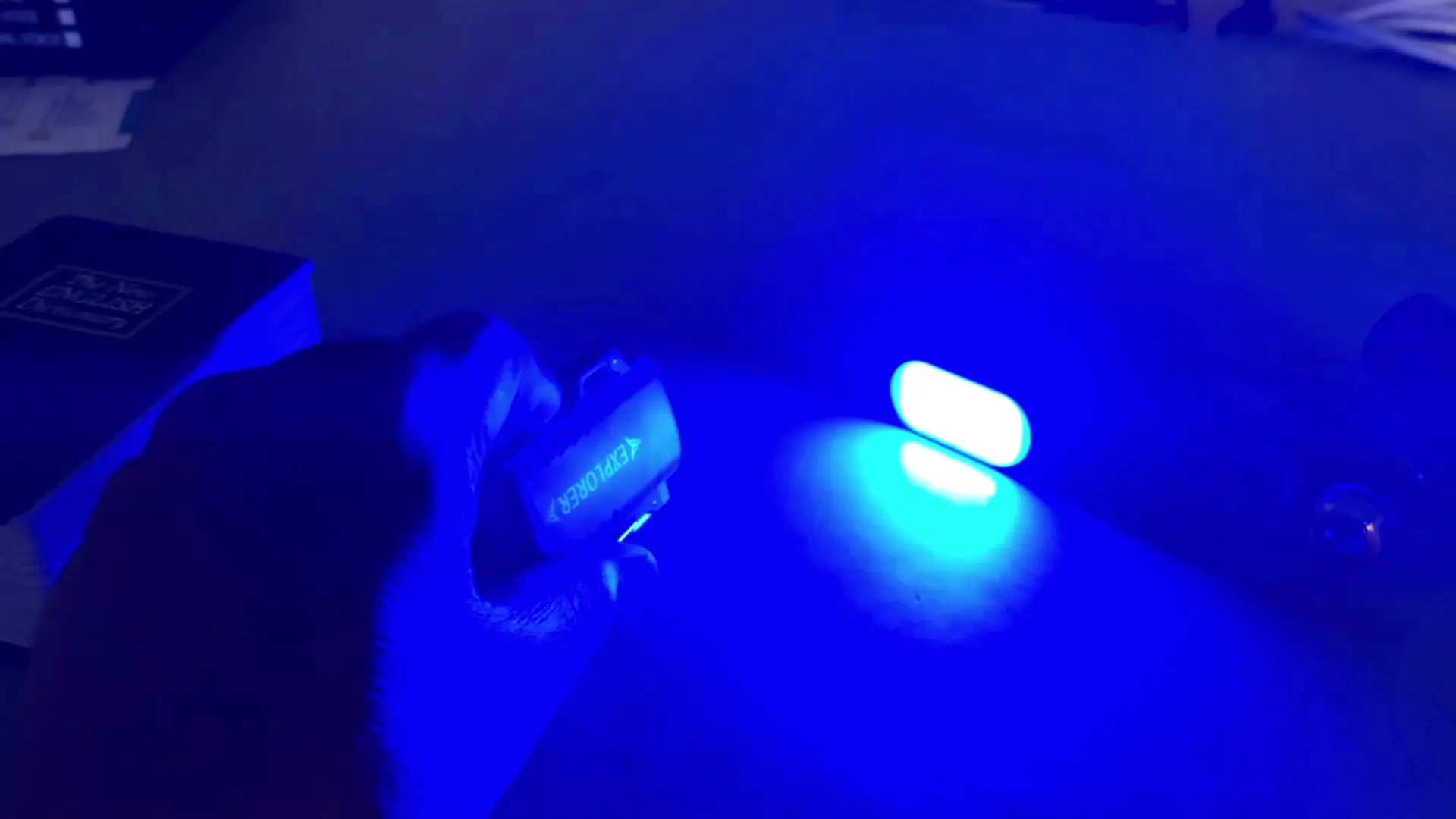
This is the gadget I nearly left out of the video entirely — I'd written it off as "probably not that interesting" before testing it, and I was wrong. It's a small magnetic light, made by AOCHUAN (the same brand that makes videography accessories), designed to snap onto a laptop or phone via an included adhesive magnetic disc — they send you a spare in case you lose the first one. It charges over USB-C and has a genuine indicator light that turns out to be full RGB, not just white: cycling through warm white, red, blue, green, purple, and cyan, with multiple brightness levels stepped up via the power button.
With the room lights off, the color output is clearly visible and stronger than expected for something this small — enough to actually add usable light to a webcam call or a phone photo, not just a gimmick glow. It's worth saying plainly: it looks noticeably better in person than it comes across on camera, since video compresses a lot of the actual color punch. Between the RGB range, the magnetic mounting, and the realistic use case for calls and photography, this ended up being the standout of the five.
Final ranking
By the end, the ranking was clear on both ends and fuzzier in the middle. The AOCHUAN fill light was the one I liked most, by a clear margin — genuinely useful, well-built, and the gadget I was most surprised by given how close I came to skipping it. On the other end, the dictionary book safe was the one I'd call least useful: past the good disguise and solid lock, it's just a box. The arc lighter, the pocket microscope, and the survival whistle all landed somewhere in the middle — each has a real strength (the lighter's build quality, the microscope's LED trick, the whistle's multi-tool packing), but none of them displaced the fill light at the top, and I'm not going to force a precise order among the three beyond that. Overall, this bunch is useful across a few different people: the fill light for photographers and anyone on video calls, the whistle and lighter for campers, and the microscope for kids who want something fun to poke around with.
Where to buy
This article contains affiliate links. If you buy through them, I may earn a commission at no extra cost to you.
Check dictionary book safe on AliExpress
Check dictionary book safe on Amazon
Check dictionary book safe on Temu
Check EXPLORER USB arc lighter on AliExpress
Check EXPLORER USB arc lighter on Amazon
Check 60X pocket microscope on AliExpress
Check 60X pocket microscope on Amazon
Check 60X pocket microscope on Temu
Check 7-in-1 survival whistle on AliExpress
Check 7-in-1 survival whistle on Amazon
Is this for you?
Who it’s for
Get the AOCHUAN fill light if you're on webcam calls a lot or want a small, colored light source for phone photos. Get the dictionary book safe if you want a novelty hiding spot for small valuables or cash. Get the arc lighter if you want a rugged, rechargeable flameless lighter for camping. Get the survival whistle if you want a compact multi-tool for camping and signaling. Get the pocket microscope if you want a cheap, casual way to look closely at small things — treat it as a fun toy, not a serious instrument.
Who should skip it
Skip the book safe if you need real security — it's a novelty disguise, not a proper safe. Skip the survival whistle if you're specifically buying it for the mystery lens's fire-starting function — that behavior is unconfirmed in this test. Skip the pocket microscope if you want genuine magnification quality for close inspection work.
Watch the review
Watch the full video on YouTubeDisclosure
Hero and evidence photos are original Gadget Hunting with RR footage, captured firsthand during testing of the units reviewed here.
This review contains an affiliate link. See our affiliate disclosure for details.